
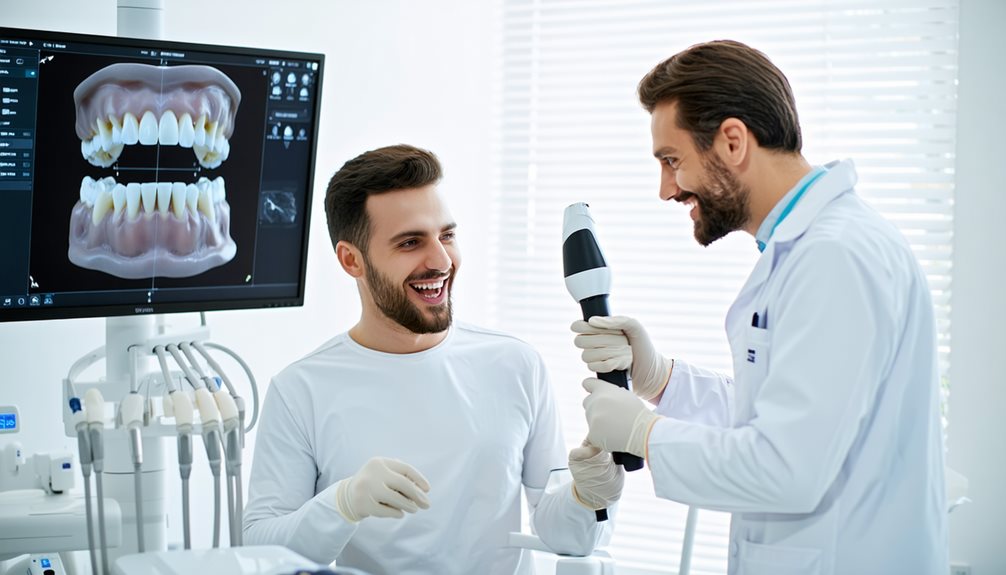
Three dentists are at the forefront of utilizing digital impressions to revolutionize dental care. Dr. Alex Daniels, known for his cutting-edge practice, integrates 3D scanning to achieve virtually error-free restorations, enhancing patient comfort. Dr. Emily Chen, an innovative oral care specialist, utilizes CAD/CAM systems for precise, customized treatments, greatly reducing chair time. Finally, Dr. Marcus Lee leads in digital dentistry expertise, adopting virtual treatment planning to tailor procedures for ideal patient outcomes. These professionals redefine dental experiences, promising greater comfort and precision, making them exemplary leaders in modern dentistry. Discover how these advancements are shaping the future of dental care.
Cutting-Edge Dental Practice
In the domain of modern dentistry, cutting-edge dental practices are increasingly defining the industry standard by integrating advanced technologies such as digital impressions. This paradigm shift is largely driven by the adoption of 3D scanning technology, which has revolutionized the way dentists collect detailed impressions of teeth and surrounding oral structures. By employing 3D scanners, dental professionals can create highly accurate digital models, eliminating the need for traditional, often uncomfortable, impression materials.
The implementation of 3D scanning technology considerably enhances patient comfort. Traditional methods of taking impressions can be cumbersome and unpleasant, involving messy materials that may cause discomfort or anxiety for patients. In contrast, digital impressions are quick, non-invasive, and precise, offering a more pleasant experience that can be particularly beneficial for individuals prone to gag reflexes or dental phobias.
Moreover, the precision of digital impressions facilitates improved communication between dental professionals and laboratories, ensuring that prosthetics, such as crowns and bridges, fit perfectly. This results in reduced chair time for patients and fewer adjustments, highlighting the efficiency and effectiveness of cutting-edge dental practices.
Consequently, the embrace of digital impressions marks a pivotal advancement in modern dentistry, aligning perfectly with the industry’s pursuit of innovation and excellence.
Innovative Oral Care Specialist
As the dental industry continues to evolve with technological advancements, the role of an innovative oral care specialist becomes increasingly significant. These specialists are at the forefront of integrating state-of-the-art technologies to enhance patient centered care, guaranteeing each patient receives tailored and efficient treatment. By leveraging digital impressions and other advanced tools, they facilitate a more accurate and comfortable experience for patients, minimizing discomfort and reducing the need for repeat visits.
Technology integration is a cornerstone of the innovative oral care specialist’s approach, enabling them to deliver precise diagnostics and treatment plans. Harnessing the power of digital imaging, CAD/CAM systems, and 3D printing, these specialists are transforming traditional dental procedures into seamless, high-tech experiences. This integration not only streamlines workflows but also enhances the quality of care, as specialists can easily share digital models and treatment plans with patients and other healthcare providers.
Moreover, the innovative oral care specialist prioritizes continuous learning and adaptation, staying abreast of emerging technologies and methodologies. This commitment to advancement guarantees that patients benefit from the latest in oral health innovations, fostering a culture of trust and excellence.
In doing so, they redefine the future of dentistry, making exceptional, technology-driven care accessible to all.
Leading Digital Dentistry Expert
A leading digital dentistry expert‘s role is pivotal in the transformation of modern dental practices, bringing the latest technologies into the examination room. These experts harness digital technology to enhance the precision and efficiency of dental procedures, fundamentally reshaping the patient experience. By integrating innovations such as digital impressions, they replace traditional, cumbersome methods with streamlined, accurate processes that reduce chair time and discomfort for patients.
Digital dentistry experts are at the forefront of adopting cutting-edge tools such as 3D scanners, CAD/CAM systems, and virtual treatment planning. These advancements allow for a more thorough analysis and tailored treatment plans, guaranteeing ideal outcomes for each patient. With a focus on digital integration, these professionals are not just improving clinical results but also elevating the overall patient journey.
The influence of digital dentistry experts extends beyond technology adoption; they serve as educators and advocates for change in the dental industry. Their commitment to ongoing research and development guarantees that dental practices remain at the forefront of innovation.
Frequently Asked Questions
How Do Digital Impressions Improve Patient Comfort During Dental Procedures?
Digital impressions greatly enhance patient comfort by reducing patient anxiety and increasing procedure efficiency. These advanced techniques eliminate the need for traditional molds, offering a quicker, more precise experience while fostering a more relaxed atmosphere for patients desiring innovative care.
What Are the Environmental Benefits of Using Digital Impressions in Dentistry?
Digital impressions offer significant environmental benefits by enhancing sustainability impact. They eliminate the need for physical molds, resulting in waste reduction. This innovation not only improves efficiency but also aligns with eco-friendly practices within the dental industry.
How Do Digital Impressions Affect the Overall Cost of Dental Treatments?
Digital impressions, through cost comparison and enhanced treatment efficiency, potentially reduce dental treatment expenses. By eliminating physical materials and streamlining processes, these innovations contribute to a more economical and precise approach, appealing to those valuing technological advancement.
Are There Any Specific Cases Where Digital Impressions Are Not Recommended?
Digital impressions may encounter limitations in specific patient conditions, such as those with excessive saliva or severe periodontal issues. Traditional methods might be preferable in such cases to guarantee accuracy and effectiveness of dental treatments.
How Do Digital Impressions Integrate With Other Dental Technologies Like 3D Printing?
Digital workflow integration facilitates seamless collaboration between digital impressions and 3D printing, enhancing accuracy benefits in dental restorations. This integration streamlines processes, reduces errors, and allows for precise fabrication of prosthetics, meeting the demand for innovative dental solutions.
Conclusion
To sum up, the integration of digital impressions by leading dental practitioners signifies a transformative shift in oral healthcare. These cutting-edge practices exemplify the future of dentistry by enhancing precision, patient comfort, and procedural efficiency. Innovative oral care specialists and digital dentistry experts are spearheading this technological advancement, ensuring superior outcomes and setting new standards in dental treatment. As digital impressions continue to evolve, they promise to redefine patient experiences and elevate the overall quality of dental services.

